

Genocide Nomenclature in Nigeria
By Aliyu U. Tilde—20 November 2025
International perception of religious conflicts in Nigeria is influenced by a pattern of propaganda driven largely by biased terminology used in identifying victims and perpetrators. A simple Internet search makes this clear: inquiries about the killing of Muslims in Nigeria produce limited results, while similar searches on the killing of Christians return extensive entries. Something is fundamentally wrong.
This disparity is not because Muslims are not being killed by Christians or even by fellow Muslims. For over twenty years—before insurgent groups and bandits began killing mostly Muslims—large-scale massacres of Muslims had already been taking place, particularly in North-Central Nigeria. These killings have continued even after 2009. Yet the Internet rarely reflects them. As a result, international observers hardly recall them, and researchers hardly notice them. The reason lies in the terminology used.
Same Crime, Different Names
When the victim is a Christian, media reporters—largely Christian themselves—explicitly identify them as Christians, even in conflicts unrelated to religion. Headlines quickly read: “Fulani Kill Christians,” “Christian Communities Attacked,” “Christian Genocide,” and more. The Internet only records what it receives.
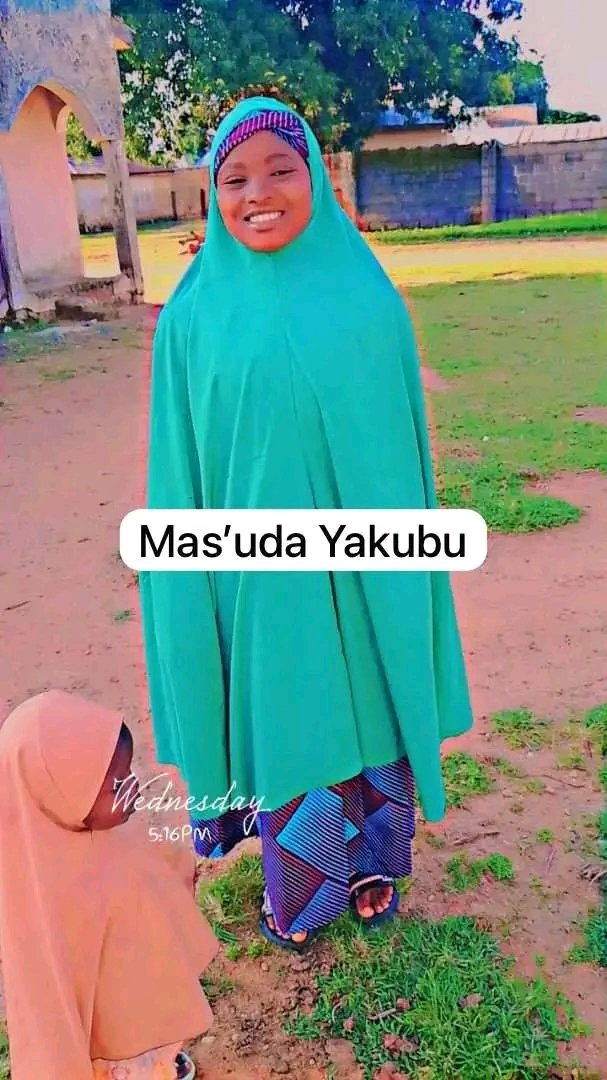
However, when Muslims are killed, their religious identity is erased. They become “villagers,” “locals,” “worshippers,” “civilians,” or “people.” The 25 abducted Kebbi schoolgirls were labeled “school children,” not “Muslim school children.” Their religious identity was deleted. Consequently, searches for Muslim killings or Muslim genocide yield little.
If attackers are Muslims, the reporting becomes explicit and accusatory: “Islamists,” “jihadists,” “Fulani militants,” “terrorists,” and so on. Researchers then collect this language as data and reinforce the bias.
But if the perpetrators are Christian-affiliated, they are softened into “youths,” “tribal militias,” “unknown gunmen,” “attackers,” or “mob.” Their Christian identity disappears, allowing them to escape the Internet’s labeling and documentation system.
Thus, the modern Internet-powered information world suffers from the longstanding illusion created by the southern Christian-dominated media: that Christians are always the victims and Muslims always the perpetrators. This narrative is false, contradicted by history, statistics, and morality.
Forgotten Massacres of Muslims
Below are major massacres of Muslims in Nigeria, carefully planned and executed by Christian groups but largely ignored, misnamed, or underreported by the media and on the Internet:
- Kasuwan Magani (1981): The first major religious crisis began with a nighttime attack on innocent Muslims by Christians.
- Kafanchan Crises (1987, 1999): Multiple waves of Muslim massacres.
- Zangon Kataf (1992): So horrific that Christian leaders were convicted; a retired General was sentenced to death.
- Tafawa Balewa Pogroms (1991, 1995, 2000, 2001): Resulted in the cleansing of the town’s Muslim founders and majority population.
- Plateau Crises (2001, 2004, 2008, 2010, 2012): More than 40 Muslim settlements destroyed.
- Yelwa Massacre (May 2004): Exceptionally brutal; the Christian president declared a state of emergency.
- Southern Kaduna (2011): Over 1,200 Muslims killed in Matsirga, Zonkwa, Kachia, and other towns by Christian militias.
- Wukari Crises (2013–2014): Jukun Christian militias carried out mass slaughter of Muslims.
- Taraba/Jalingo/Ardo Kola (2012–2017): Entire Muslim communities wiped out.
- Mambilla Plateau Massacre (June 2017): 727 Muslim Fulani herders massacred under the supervision of Christian officials in Sardauna LGA and Taraba State Government.
- Numan Massacre (November 2017): Hundreds of Fulani Muslims killed by Bachama Christian militias.
Despite their scale and brutality, these events are labeled as “ethnic clashes,” “reprisals,” “intercommunal violence,” “farmer–herder conflict,” or “mob attacks.” Yet when Muslims attack Christians—often in reprisal—the language shifts immediately to “Islamic violence,” “jihad,” “Christian genocide,” or “religious persecution.”
The double standard is striking.
Reasons for the Bias
The naming bias exists for several reasons.
Western institutions—including major media organizations—are culturally Christian. So is much of Nigeria’s media landscape. Their sympathies and moral instincts naturally tilt toward Christian victims. Thus, a Muslim killed in Kuru becomes a “Nigerian villager,” while a Christian killed in Jos becomes “a Christian.”
Evangelical churches and Western-funded NGOs also contribute to the narrative. Organizations such as CSW, Genocide Watch, Open Doors, ICC Evangelicals and others produce reports consumed widely by international outlets. Their narratives shape policymakers in the US, UK, and Europe. Muslims lack comparable global propaganda infrastructure.
Christian conflict entrepreneurs in the North-Central, IPOB activists, and evangelical groups feed this narrative to attract NGO funding, Western pressure, UN attention, political leverage, and even weapons.
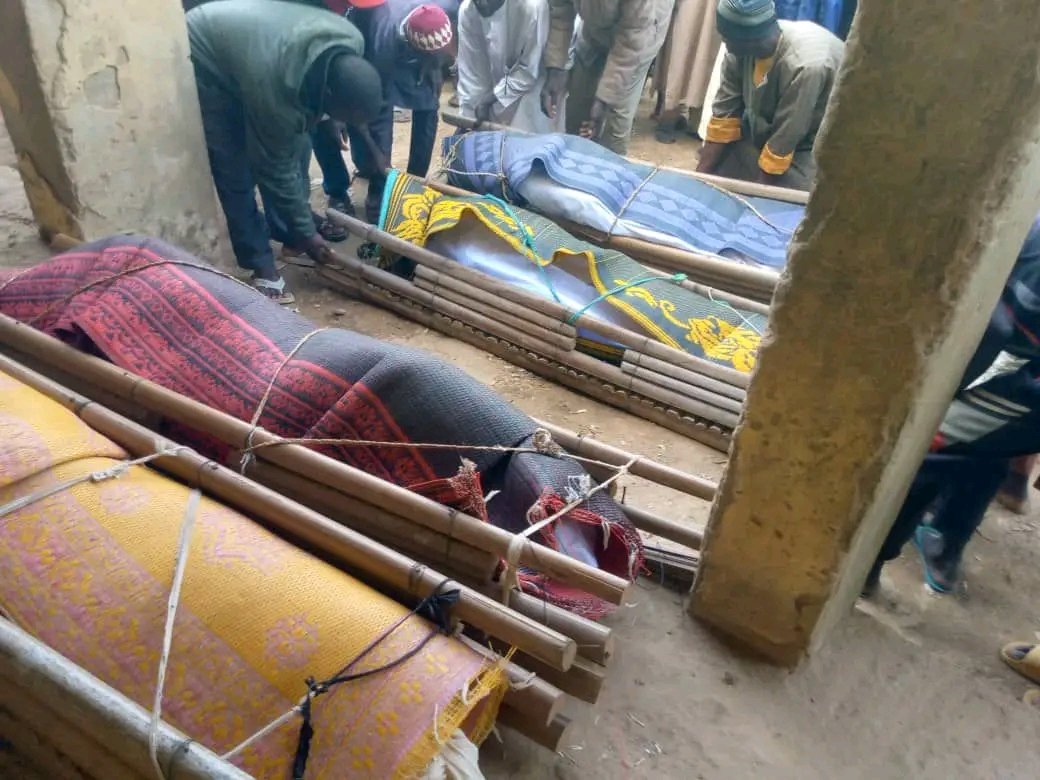
In some cases, data is deliberately falsified. Some Christian clerics and politicians reclassify Muslim victims as Christians. Photos of Muslim burial rites are rebranded online as “Christian massacres.” During the Kebbi school abduction, even foreign officials repeated claims that the victims were Christians until the school released the names—all Muslim.
Similar distortions occur in reports from Bama, Katsina, and elsewhere. Some fabrications are absurd—like a reverend claiming he personally conducted 70 mass burials of 500 people each.
Additionally, differences in how communities express grief fuel the imbalance. Muslims typically mourn quietly and move on, saying “we leave everything to God.” Christians often broadcast their suffering repeatedly online and internationally. Social media algorithms reward repetition, amplifying the Christian victim narrative and burying the Muslim one.
Conclusion
Balanced vocabulary is crucial for accurate understanding of Nigeria’s conflicts. Since international narratives—especially during the Trump era—have heavily favored portrayals of Christians as the primary victims, Muslims in Nigeria must adapt.
They must consistently identify the religious identity of victims and perpetrators—just as Christian media already does. Only this will draw global attention to their suffering and correct the distorted narrative dominating international discourse.
Without an egalitarian balance of conflict terminology, the world will continue to view Nigerian Muslims as the primary perpetrators of violence and ignore the crimes committed against them.


Leave a Reply